Shiva Statues: Meaning, Symbolism, Types & How to Choose the Perfect Lord Shiva Idol for Your Home
Lord Shiva holds a special place in Hindu spirituality as the embodiment of transformation, wisdom, meditation and divine power. Known as Mahadev, Bholenath, Shankar and the Supreme Yogi, Lord Shiva represents the balance between creation and destruction. His presence reminds devotees that change is a natural part of life and that inner peace can be found through devotion, discipline and self-awareness.
For generations, Shiva statues have been cherished in Indian homes, temples and sacred spaces. More than beautiful works of religious art, these idols carry deep spiritual meanings and reflect different aspects of Lord Shiva's divine personality. From a peaceful meditating Shiva to the powerful form of Nataraja, every representation tells a story.
Whether you wish to create a peaceful home mandir, add a meaningful spiritual element to your interior or give a thoughtful religious gift, choosing a Shiva statue can be a wonderful way to bring art and devotion together.
The Spiritual Significance of Lord Shiva Statues
Lord Shiva is often described as the destroyer in the Hindu Trinity, alongside Brahma the creator and Vishnu the preserver. However, destruction in this context does not simply mean an ending. It represents the removal of ignorance, negativity and outdated patterns so that renewal and transformation can take place.
A Shiva murti reflects this powerful philosophy. His calm expression represents control over the mind, while his divine attributes communicate strength, wisdom and freedom from worldly attachments.
For devotees, keeping a Shiva idol in a home or prayer room can serve as a reminder to live with patience, compassion and clarity. The statue may become a focal point for daily prayers, meditation and quiet reflection. Its significance is not limited to religious rituals; it can also inspire a more thoughtful and balanced approach to everyday life.
Understanding the Symbols Found in Shiva Statues
One of the most fascinating aspects of Lord Shiva's appearance is the symbolism associated with his form. Each element has a story and a spiritual message.
1. The Third Eye
Lord Shiva's third eye represents higher awareness, wisdom and the ability to see beyond ordinary perception. It is also associated with the destruction of ignorance and illusion. The third eye reminds devotees to look beyond appearances and develop deeper understanding.
2. The Crescent Moon
The crescent moon adorning Shiva's head is commonly associated with time, balance and the cycles of nature. It reflects the idea that even as time moves forward, spiritual awareness can remain steady.
3. The River Ganga
The sacred River Ganga is traditionally depicted flowing from Shiva's matted hair. This imagery represents purity, spiritual cleansing and divine grace. It is one of the most recognisable features in traditional Shiva sculptures.
4. The Snake Around His Neck
The serpent around Shiva's neck symbolises mastery over fear, ego and the forces of nature. It also represents awareness of mortality and the ability to remain calm in the face of challenges.
5. The Trishul
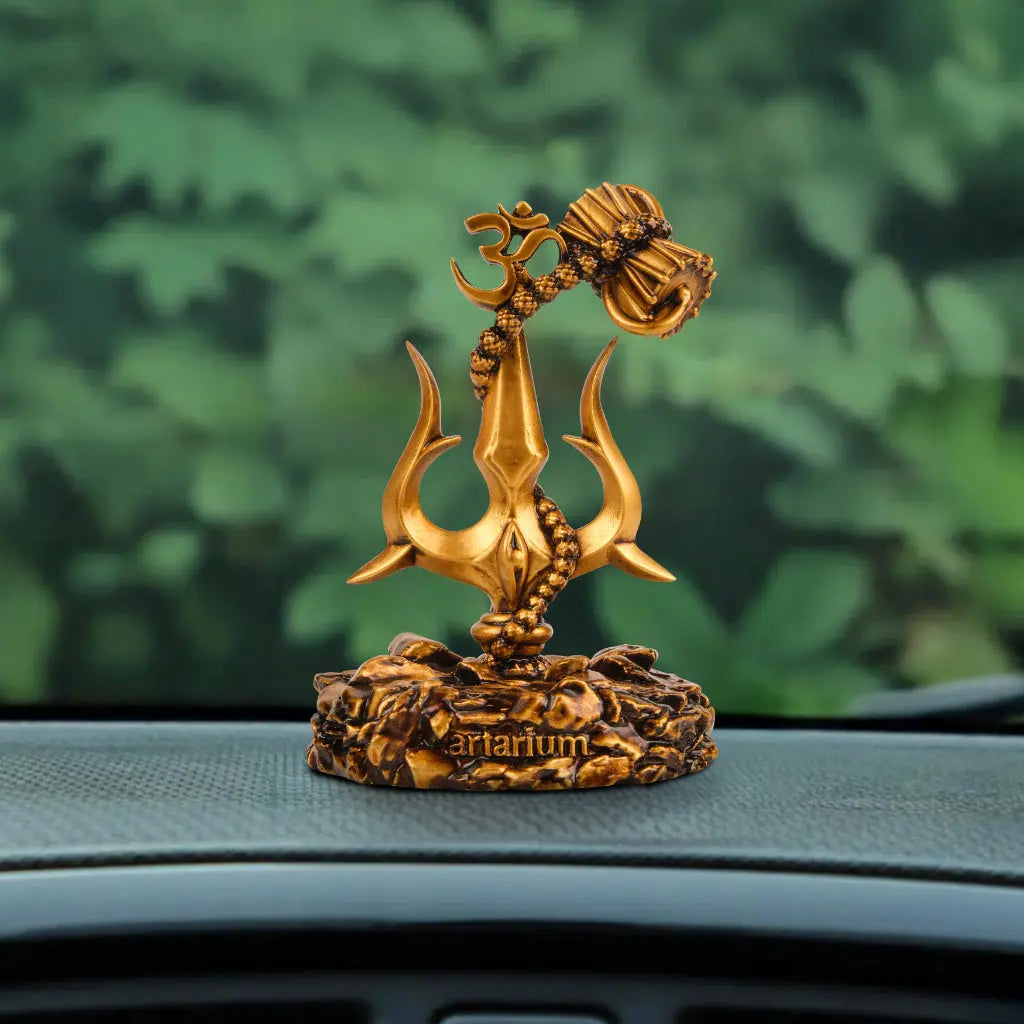
The Trishul, or trident, is one of Lord Shiva's most recognised attributes. Its three prongs are often interpreted as representing different aspects of existence, such as creation, preservation and destruction. It is also associated with the power to overcome negative influences.
6. The Damru
The small two-headed drum held by Shiva is known as the Damru. Its rhythm is traditionally connected with cosmic sound, creation and the movement of the universe. It represents the dynamic energy behind life and transformation.
Together, these symbols make Shiva statues meaningful works of sacred art. They offer devotees an opportunity to reflect on the values and teachings associated with Mahadev.
Popular Types of Shiva Statues
Lord Shiva is worshipped in several forms, each highlighting a different aspect of his divine nature. Understanding these forms can help you select an idol that suits your spiritual preferences and the character of your space.
1. Meditating Shiva Statue
The meditating form of Lord Shiva is among the most loved representations. Often shown seated in a peaceful posture with closed eyes, this form reflects deep concentration, self-discipline and inner stillness.
A meditating Shiva statue can be a meaningful addition to a meditation corner, study area or home mandir. Its serene appearance creates a visual reminder to pause, breathe and reconnect with yourself.
2. Nataraja Shiva Statue
Nataraja is Lord Shiva in his cosmic dancing form. The dance represents the continuous cycle of creation, preservation and destruction. It captures the idea that the universe is always moving and changing.
Nataraja statues are admired for their artistic detail, expressive movement and spiritual symbolism. They can make striking decorative pieces for people who appreciate traditional Indian sculpture and religious art.
3. Shivling
The Shivling is a sacred and distinctive representation of Lord Shiva. It symbolises the infinite and formless nature of the divine. Unlike human-shaped idols, the Shivling expresses a spiritual concept that goes beyond physical appearance.
Many devotees choose a Shivling for their home mandir and follow their family's or tradition's customary practices for worship and care.
4. Shiva with Trishul and Damru
A Shiva representation featuring the Trishul and Damru highlights two important symbols associated with Mahadev. The Trishul expresses divine strength, while the Damru is linked with cosmic rhythm and creation.
These designs are suitable for devotees who appreciate the traditional attributes of Lord Shiva and want a recognisable spiritual motif in their home.
5. Mystical Shiva Statue
Mystical Shiva designs often combine traditional iconography with artistic detailing, expressive finishes and decorative elements. They may present a more contemporary interpretation while retaining the spiritual character of Lord Shiva.
Such statues can complement both traditional interiors and modern spaces, making them an appealing choice for people who value religious art as part of their home décor.
How to Choose the Right Shiva Statue for Your Home
Selecting a Shiva statue is a personal decision. The right choice depends on your devotional preferences, available space and the style of sculpture you find meaningful.
Consider the form. Begin by deciding which representation connects with you. A meditating Shiva may appeal to someone who values peace and contemplation, while a Nataraja statue may attract those who admire movement, transformation and artistic expression. A Shivling may be the preferred choice for traditional worship.
Choose a suitable size. Consider where you intend to place the idol. A compact statue can work well on a small mandir shelf, desk or display unit. A larger sculpture may suit a dedicated prayer room or spacious interior. Make sure the surface is stable and has enough room for the statue and any accompanying decorative items.
Pay attention to craftsmanship. Look closely at the facial expression, posture, proportions and detailing. Features such as the Trishul, Damru, crescent moon and matted hair should be represented with care. A well-finished statue can make the symbolism easier to appreciate.
Think about the material and finish. Shiva idols are available in different materials and finishes, depending on the style and craftsmanship. Consider the appearance, weight, maintenance requirements and suitability of the material for your intended location.
Match the setting. A traditional home mandir may call for a classic devotional design, while a contemporary living space may suit a more artistic interpretation. Choose a statue that feels appropriate to its surroundings without losing its spiritual significance.
Where to Place a Shiva Idol
Many families prefer to place a Shiva statue in a clean, peaceful area reserved for prayer or meditation. A home mandir is a natural choice, but a quiet personal space can also be suitable for reflection.
Before placing the idol, consider the following practical points:
Choose a clean and stable surface where the statue will not be easily disturbed.
Keep enough space around it so that the sculpture can be viewed and appreciated.
Avoid placing it somewhere exposed to accidental knocks, moisture or excessive dust.
If the statue is intended for worship, follow the customs and guidance of your family or religious tradition.
Keep the area organised and maintain it regularly.
There are different customs regarding the placement and worship of particular forms of Lord Shiva. If you follow specific religious or Vastu traditions, it is best to consult a knowledgeable family elder or trusted religious guide rather than relying on one universal rule.
Shiva Statues as Meaningful Gifts
A Lord Shiva statue can be a thoughtful gift for many important occasions. It may be presented during housewarming ceremonies, weddings, festivals, anniversaries or other family celebrations.
For someone setting up a new home, a Shiva idol can represent a wish for peace, wisdom and spiritual strength. For a devotee, it can be a personal expression of faith. For someone who appreciates Indian art, a finely detailed Shiva sculpture can also be a memorable decorative piece.
When choosing a statue as a gift, consider the recipient's preferences, available space and religious customs. A compact idol may be convenient for a small home mandir, while an artistic statue may suit someone who enjoys traditional sculpture.
Caring for Your Shiva Statue
Proper care helps preserve the appearance and detailing of a Shiva idol over time. The right cleaning method depends on the material and finish, so always check the care instructions supplied with the product.
For general upkeep, use a soft, clean cloth to remove dust. Avoid harsh chemicals, abrasive scrubbers and excessive water, particularly on painted, plated or delicate finishes. If the statue is used for worship, follow the recommended care practices for its specific material and form.
Handle the idol carefully when moving or cleaning it, and keep it on a secure surface. Regular gentle maintenance helps retain its beauty and keeps the surrounding prayer space welcoming.
Explore Shiva Statues at Artarium
Choosing a Shiva statue is an opportunity to bring together devotion, traditional symbolism and artistic beauty. Whether you are drawn to the peaceful expression of a meditating Shiva, the sacred significance of a Shivling or the powerful imagery of the Trishul and Damru, every form offers a different way to appreciate Mahadev.
At Artarium, you can explore a selection of Shiva-inspired idols and decorative pieces, including the Shiv-Lingam idol, Mystical Shiva, Lord Shiva Trishul With Damru, Shiv Damru Idol and Shiv Trishul Idol. The collection offers different designs for people looking to add a devotional touch to their home, mandir or personal space.
Conclusion
Shiva statues hold a timeless place in Indian spiritual and artistic traditions. Their beauty lies not only in their sculptural details but also in the ideas they represent: wisdom, transformation, courage, meditation and inner balance.
From the simplicity of the Shivling to the expressive movement of Nataraja, each form offers a unique perspective on Lord Shiva. By considering the symbolism, craftsmanship, size and intended setting, you can choose an idol that feels meaningful and complements your space.
Whether selected for daily devotion, a peaceful corner at home or a thoughtful gift, a Shiva statue can serve as a lasting reminder of the strength and serenity associated with Mahadev.
Comments